

****
But first, it’s time for one of my big, blow-out eBay sales!
I’m auctioning extra books from recent collections. Highlight? Stephen King’s ’Salem’s Lot in a good $7.95/Father Cody jacket. There’s also a Jean Arp signed, limited edition that’s a bit too funky for me.
I am offering box lots from the James Strand and Maurice Neville collections (see below). And plenty of nice titles in not-quite-nice-enough condition.
Everything starts at $9.99! All items are described in the listing text and are fully returnable, as always.
****
The Last Chapter of the Maurice Neville Collection. For a dozen years or so, if a large book collection came up for sale in Northern California, there was a good chance I’d get a call about it. At Eureka Books, we bought about one big collection each year. I liked the challenge of these projects, and I was young(er) and our shop had staff to help. For a time, we even had a neighboring business with an ancient forklift we could borrow and an employee certified to drive it. That made unloading the trucks so much easier.
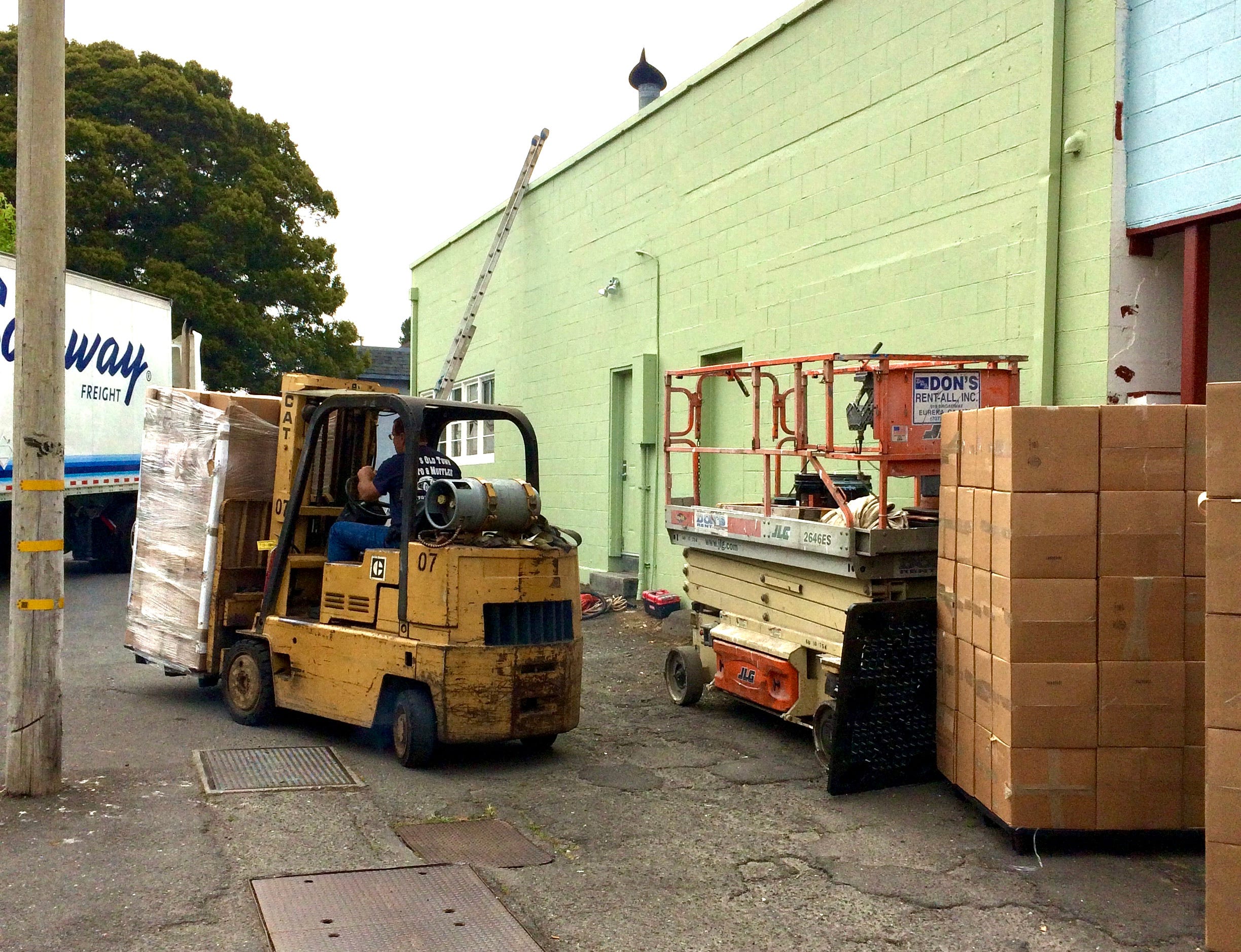
The advantage of large collections is that they tend to be relatively cheap to buy because they require so much labor to pack, ship, sort, and sell. Also, there’s little competition. One disadvantage is that large collections have typically overflowed the sensible places for books. It’s easy for a collector to buy books in ones and twos. Hauling them all out at once, down ladders or up stairs, is exhausting.
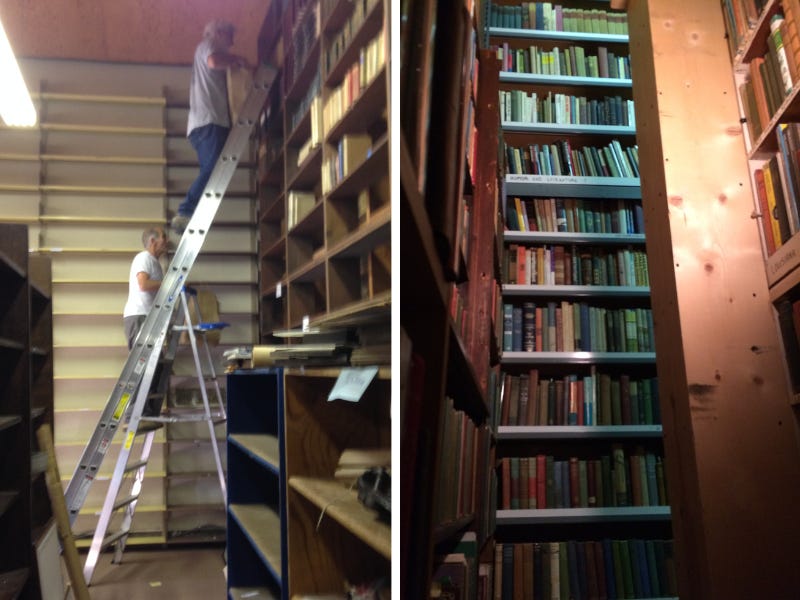
Books are expensive to move. Boxes alone can cost thousands of dollars. Trucking is costly and often complicated. Shipping heavy boxes adds up.
And something always goes wrong.
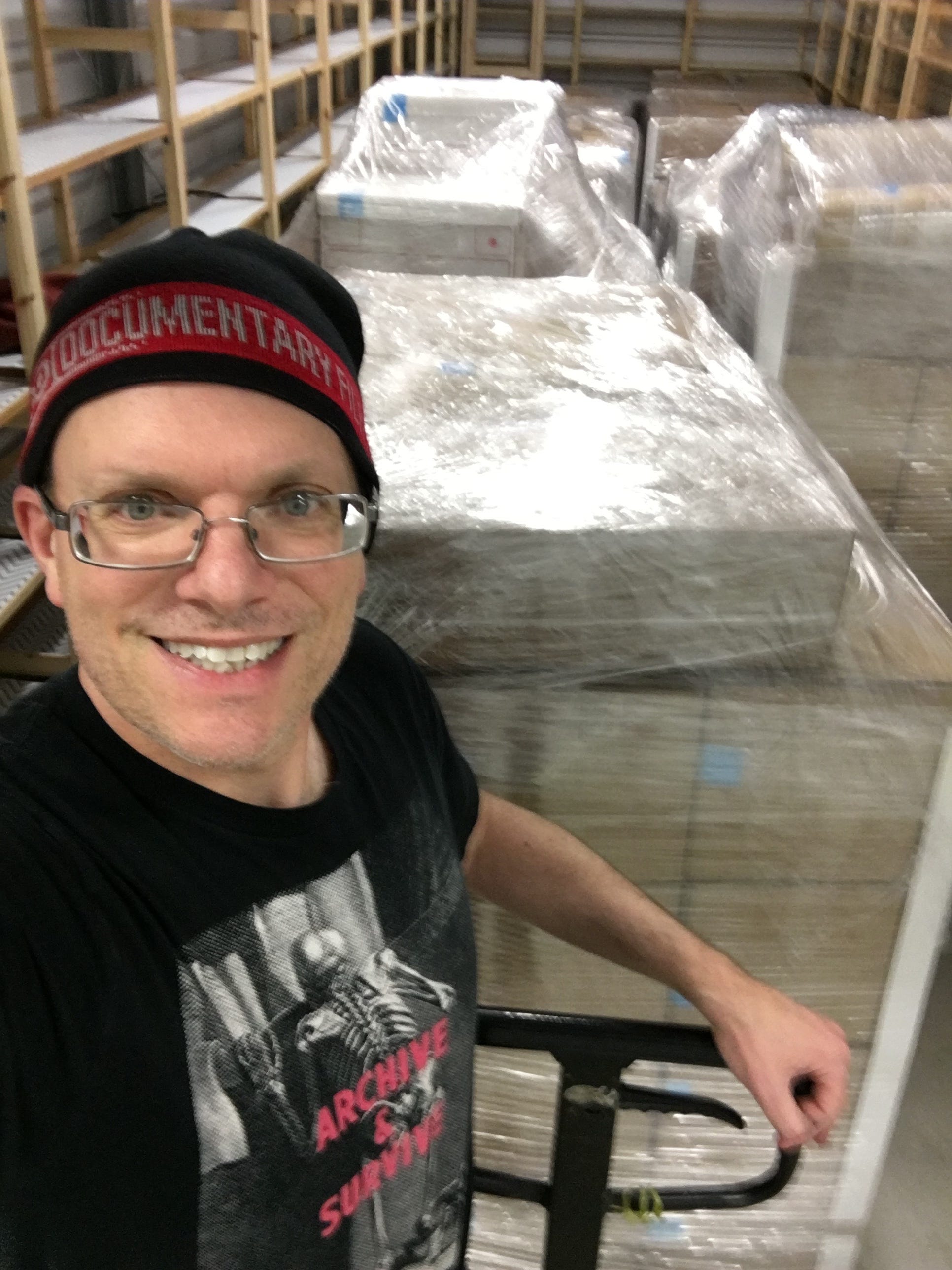
In the time I’ve been in Portland, I haven’t acquired more than 75 boxes of books at one time. That may seem like a lot, but it’s only 1,500 to 2,000 books. When I owned Eureka Books, we moved tens of thousands of books each year.
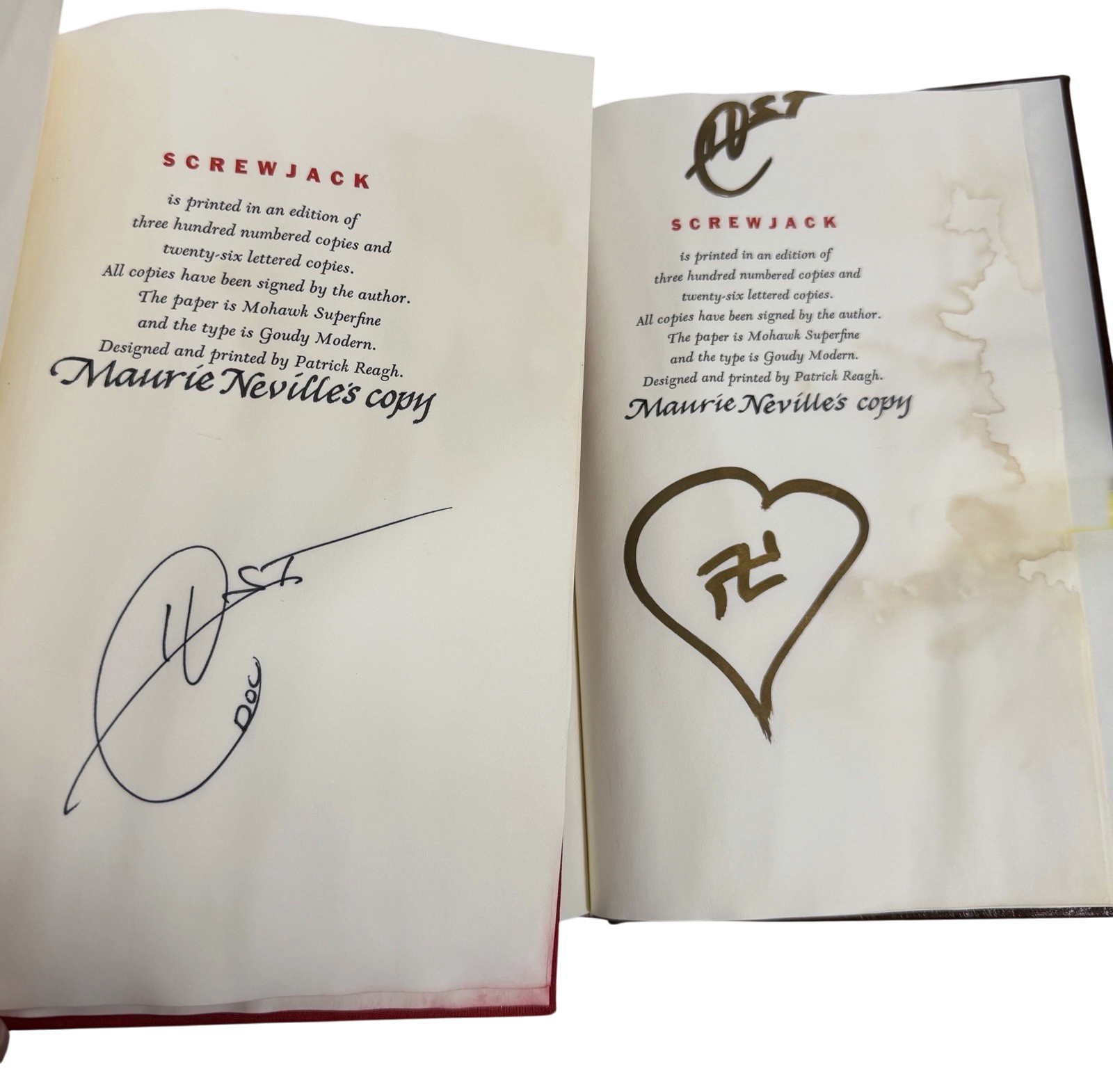
This past summer, I got an email from a colleague in the book trade asking if I’d be interested in the last part of Maurice Neville’s collection. I never met Maurie, but I had heard of him. He was a Southern California collector-dealer who got into the book business in the late 1970s when he bought a 9,000-volume library from Heritage Book Shop for $180,000. For a time, he also joined the limited-edition publishing game, putting out Screwjack by Hunter S. Thompson and a limited edition of the Chinatown screenplay signed by the screenwriter, Robert Towne, and the star, Jack Nicholson.
When Neville retired in 2004, he dispersed the impressive high spots of his collection in a two-part Sotheby’s sale. He passed away in 2025. His family consigned the best of the remaining books to an auction house and needed someone to remove the rest.
For many dealers, what’s left after two auction houses have picked through a collection is not very attractive. That’s why I got the call. The bookseller managing the estate had started in Los Angeles and worked his way up the West Coast, contacting potential buyers. No one had even been willing to look at the books.
The photos I received of the collection were too low-res to make out titles, and even with sharper images, it’s impossible to identify first editions and signed books. My philosophy about collections is that you buy the collector. If the collector is interesting, the books will be interesting, too, even if they have been picked over. In fact, most of the large collections I have purchased had been picked at least once. Dealers and auction houses that pull individual books from collections tend to have a narrow focus. They grab the highlights and miss niche titles and signed books.
There were about 6,000 volumes remaining in a house in central Paso Robles, California, where Neville stored most of his books. I figured I could use the best 1,000 of them. I called my friend James Gannon, of InkQ Rare Books near Dallas, Texas, for a second opinion. He had worked at Heritage Book Shop and had direct experience with Neville and his collection. James and I also have a similar approach to book buying. In the last few years, he obtained the libraries of the writer Larry McMurtry and the screenwriter William Goldman, alongside several other notable collections. James was enthusiastic about the last 6,000 Neville books, and we decided to buy them together.
James of InkQ just told me he’s publishing his first list of Neville books today—> take a look. This is a private preview - you have to have to use the link to see the books.
My first task was to find someone to take the 5,000 books that James and I didn’t think we’d want to send to our shops. This count was just a guess, but an educated one, based on similar purchases, and I think I judged it correctly.
Selling the bulk of the books was tricky. We only had three days’ access to the house, a Wednesday through Friday in late September. I contacted a bookseller in Los Angeles, and he agreed to send a truck for the rest of the Neville books. I’d worked with him before on much larger deals and told him he could decide how much to pay for the books once he unpacked them. On the Monday before our three-day window in Paso (as locals call Paso Robles), his schedule changed. He could come on Saturday, he offered. That didn’t work with my Friday deadline. I called my backup dealer. He couldn’t make it in time either. Something always goes wrong.
After my original bulk book buyer cancelled, I ordered a pallet of boxes to be sent to Neville’s house, and I rented a 26-foot moving truck. Costs kept going up; they always do. I had promised to have all the books out of the house by Friday, and the only way I could guarantee that was to have boxes on hand and a way to move them.
On Tuesday morning, hours before my flight out of Portland, I started cold-calling bookstores within fifty miles of Neville’s house. Most said no. I eventually talked a bookseller into coming out to look the next day.1
Two of Neville’s grandsons met us at the house that Wednesday morning. James and I went through the books, pulling out titles we wanted. The grandsons generously agreed to help us pack.
The books largely matched my expectations. There were plenty of $100 to $300 books of no interest to auction houses and enough sleepers above that price range to make the deal work. The rest of the collection split evenly between titles with no appreciable resale value and those worth $10 to $100. Neville had shelves of first editions by authors who are no longer collected alongside solid used books about California history, music, and bullfighting, among other topics.
The unexpected factor was that there had been a plumbing leak in the book house that went unnoticed for a long time. Maurie lived outside of town, and the home where he kept the bulk of his remaining collection was often empty, except for the books. After the flood, lots of waterlogged volumes were tossed, but plenty remained on the shelves. As I selected titles, I also made a depressing pile of ruined books: virtually Neville’s entire run of inscribed John D. MacDonald first editions; nearly all his science fiction; some of his personal copies of the books he published. It was a good reminder that bad things happen to books stored out of sight.
When the local bookstore owner who I hoped would buy the rest of the books arrived, he was daunted by the quantity. I made him an offer too good to refuse. I sold the books for not much more than the cost of packing and delivery.
We planned delivery for the next afternoon. I wish Maurie Neville hadn’t shelved most of his books in the basement. His grandsons and I carried more than two hundred boxes up the stairs. We also had to wheel hundreds of boxes up a ramp and into the truck and to build stacks of boxes inside. The daytime highs exceeded 90 degrees. While the grandsons and I humped the bulk of the books, James worked all day packing our keepers.
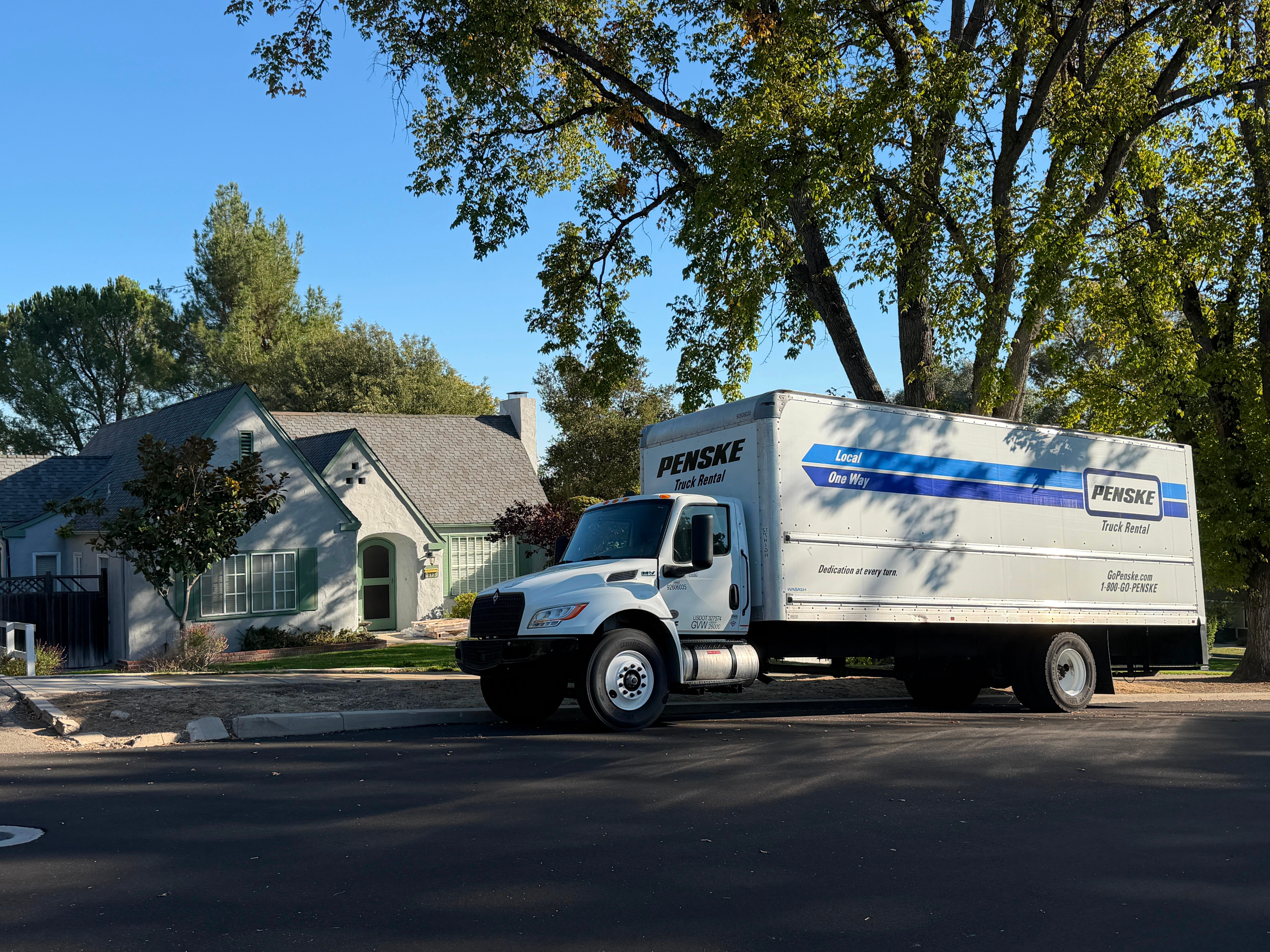
The rented truck looked rather empty, even with 240 boxes inside. However, the weight of the books put it very close to the 10,000-pound limit. From Neville’s house, we headed to a storage facility about 40 minutes away, where the bookstore owner kept his extra stock. That was fine, except there was a 7% downhill grade along the route.
I drove the truck. On the steep section, the five tons of books I was hauling pushed me to go faster and faster. I had the truck lane more or less to myself until a sedan passed me, pulled in front of the truck, and slowed down. I nearly rear-ended the car. I couldn’t go around it because the lane beside me was full of vehicles responding to a brush fire. By the time the grade leveled out, my brakes were smoking. I made it to the town at the bottom of the hill, parked, and called it a day. The brakes wouldn’t be cool enough to drive safely until after the storage facility closed for the night.
The next morning, James and I picked up the abandoned truck, drove it down the coast to the storage facility, unloaded it in ridiculous heat for late September, and finally headed back to our respective homes.
The experience of selling the remainder of the Neville library clarified for me the changes in the book market in the last ten years. Since I last sold off a big chunk of a collection, the general out-of-print and antiquarian book business has continued to contract, the recent boom in AI companies buying books notwithstanding. The market for older books has diminished even compared to the low demand I remembered. One bookseller I approached about the Neville books said that Boomers continually offer him houses full of books that current readers and collectors have no interest in. I could have sold 5,000 trade paperback novels from the 21st century far quicker than 5,000 hardcovers collected in the 20th.
Looking back, I’m not sure it was worth it. Financially, it will be fine, even with the unexpected costs, the dozens of waterlogged books, and the honor of paying more than $9.00 per gallon at the pump for the first time in my life.

The Neville books are interesting. My “buy the collector” approach proved true once again. Subscribers to this newsletter will see highlights from the collection in the coming months.
I might be too old to do these physical jobs anymore. I didn’t hurt myself, and I kept pace with the Neville grandsons. But the truth is, I can get all the book I can catalog while sitting comfortably at my desk. It may be time to leave these projects to the younger generation.
—Scott Brown, Downtown Brown Books

So far, he hasn’t started offering books from Neville’s library online. When he does, I’ll put a link in a future Substack post.
Quite a story Scott! I understand all of the above - but with 2 bad shoulders - I came to the conclusion that my days of hauling books are behind me.
Maurie was a good and interesting man and I would think there must be some cool books.
Best of luck. See you soon
Great piece on book buying. Thank you Scott!